


Adiele Uduma always holds her breath whenever her husband, Samuel, gets behind the wheels of his battered 12-year-old Toyota Corolla. She suspects his driving skills, and worries if a bolt or nut would come apart in the ramshackle engine; but her real fear is the unhealthy combination of his quick temper and the aggressive driving of majority of Lagos motorists.
“Whenever I am in the car, he is always getting into shouting with drivers who block him or enter his lane without begging,” said the middle aged housewife. “It makes me wonder the kind of things he might do when I’m not in the car with him. So many times he has come home with rumpled shirt ties but never said what happened.”
Then last week, her husband got into an altercation with another motorist that scraped his vehicle a few blocks from their home.
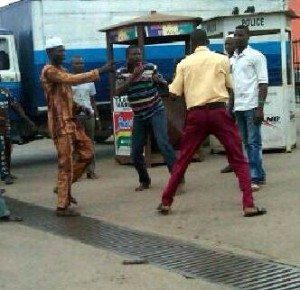
“Neighbours rushed and told me that he was fighting with one Baba like that,” said Mrs Uduma, a frown wrinkling her habitual cheery demeanour as she recounted the event. “When I got there, I was shocked to see that it was an elderly Yoruba chief that he was shouting with. I know what I went through before we could calm them down; the scratch (on Mr Uduma’s car) wasn’t even serious.”
Mr Uduma’s case highlights that of a great deal of Lagos motorists who have contributed to the daily spectacles of road rage across the metropolis. And as a frenzy of last minute preparations and travelling that characterise the approach of the festive season (Ember months), incidents of road rage are expected to gradually increased, often with dire results.
The extreme cases of road rage
Early 2010, Nnamdi Onyeka got into a row with Ogunjobi Azeez, who had just rear-ended his Toyota Camry near Iyana-Oworo. Seeing that Mr Azeez’s Celica got the worse of the collision, Mr Onyeka made to drive away from the scene, but the incensed Mr Azeez jumped onto the bonnet of his car in a desperate bid to stop him from getting away.
Eyewitness accounts reveal that Mr Onyeka drove on, unruffled by the man clinging precariously to his bonnet. Tragedy struck after Mr Onyeka had reportedly drove almost 5 kilometres on the Island-bound section of the Third Mainland Bridge before he hit a truck, careened into the steel railings of the bridge, and Mr Azeez got flung into the Lagos Lagoon as a result of the impact.
His body was pulled out of the murky waters hours later.
A few weeks later, two soldiers descended on Femi Olaroye, a commercial bus driver and beat him till he lost consciousness. The soldiers were furious that Mr Olaroye had scratched their car as he tried to swerve into their lane in the typical Lagos-Badagry Expressway traffic congestion. The enraged soldiers also tore off a military sticker that was posted on the bus windshield.
Several similar cases abound in the Lagos metropolis as a rapidly growing population strains ageing and inadequate infrastructure.
Navigating the bedlam safely
Spokesperson for the Federal Road Safety Commission (FRSC), Jonas Agwu, attributes the high rates of road rage incidents to the inability of Lagos drivers in controlling their emotions when they are behind the wheels.
Jonas Agwu says many drivers in Lagos cannot control their emotions when they are behind the wheel.
“The fact is that our environment, being a developing society, affects our driving skills,” he said. “In Lagos State, the traffic congestion is enough to make people drive in rage. However, people should learn to follow the basic rules that help in avoiding road rage in Lagos.
Mr Agwu advises motorists to always plan their trips so as to avoid spending hours in traffic, ensure the roadworthiness of their vehicles, and strive to divorce their emotional states from driving. He also encourages Lagos road users to be courteous to fellow motorists.
“Emotional challenges, which could be as a result of squabbles between spouses, children, relatives, or even colleagues, often affect the way some people drive,” he said. “Fellow motorists who drive bumper to bumper, law enforcement agents who pull you over, commercial bus drivers who drive erratically, all contribute to making a motorist angry. However, we must learn to exhibit a high level of maturity.”
Mrs Uduma does not question her husband’s maturity around the house; 14 years of married life and six children have taken care of that. Her constant worry is the kind of education he is getting from fellow Lagos motorists.
Facts to consider
- Commercial truck and bus drivers are more prone to road rage.
- Incidents of road rage are higher in younger drivers.
- Men are more susceptible to road rage than women.
- Motorcyclists (Okada) are the greatest causes of road rage.
- Traffic congestion can exacerbate road rage incidents.
- The high rates of unreported cases of road rage encourage aggressiveness behind wheels.
Tips to prevent road rage
- Get your Zs. A national epidemic of sleepiness is a contributing factor to road rage, according to the National Sleep Foundation. We all know how cranky we get without enough sleep. It makes us prone to feelings of annoyance, resentment and even anger. Eight hours is still the recommended daily dose of sleep for adults.
- Plan ahead. Do you regularly whiz through your morning routine in a whirlwind of chaos, trying to make up time while on the road? Do you allow just enough time to drive to an appointment? Then you’re probably also more prone to a lead foot and a lost temper. If you add 10 minutes to your expected travel time, you’ll have time to stop for fuel, safely navigate bad spots or detour around road construction. Also, try preparing clothing, briefcases, children’s school bags and lunches the night before to minimise your morning rush. Extra time equals calmer driving.
- Your car is not a therapist. Many of us love and identify with our cars, but sometimes you can take the “car as extension of self” idea too seriously. If your boss or your spouse left you steaming, take care not to use driving as a way to blow off steam. Competitive types shouldn’t try to prove themselves on heavily travelled thoroughfares. No matter how much power you’ve got under the hood, your vehicle is first and foremost a mode of transportation, not a weapon.
- Turn down the bass. Without getting into the argument over how “aggressive music makes people aggressive”, it makes sense that listening to relaxing music — or even a comedy channel on the radio — will make you less pumped up for action than a driving bass line. Try tuning in to classical or jazz to reduce stress.
- Loosen up, then breathe: If you notice yourself clenching the steering wheel in a death grip, try flexing your fingers and loosening your hold — you’ll find that you can control the car just as well. If your right foot is cramped, set the cruise control if traffic allows. If you’re on a prolonged road trip, try not to exceed three hours of travel time without a break where you get out and stretch. Struggling to see through a dirty windshield is also an unnecessary stress factor, so fill up with washer fluid before you go. Periodically roll down the window and breathe deeply and slowly.
- It’s not about you. Perhaps another driver cut you off. Or the car in front of you is braking erratically. Before you assume the driver is getting off on your rising anger levels, realise that you, as an individual, are not the target. Perhaps the driver simply made a mistake or was just being oblivious. Maybe there’s a screaming baby, a loose pet or a crazed bee in the car. Maybe he was on a cell phone. The point is, don’t take things so personally.
- Hostility is toxic. And risky. People most prone to anger are almost three times more likely to have a heart attack than those with low anger, according to the American Psychological Association. Other health risks seen in those who display hostility include obesity, depression and stroke. Safe driving promotes healthy hearts.
- Use restaurant etiquette. While it’s upsetting when a stranger is rude or cuts in line in a restaurant or store, most folks wouldn’t lose their cool and become abusive as a result. It isn’t only because they have good manners. Driving a car makes people feel more isolated and protected, allowing them to act in ways they would normally find embarrassing. So when another driver acts like a jerk, respond as though you’re in a restaurant.
- Take the self-test. Classes designed to help curb aggressive driving often have participants tape-record themselves while driving. Hearing themselves swear or rant on tape is enough of a wake-up call for them to recognise and reduce dangerous behaviour. So try analysing your driving.
Do any of the following statements sound like you?
- I regularly exceed the speed limit in order to get to work on time.
- I tailgate other drivers, especially those who sit in the left lane.
- I flash my lights and honk my horn to let drivers know when they annoy me.
- I verbally abuse other drivers whether they can hear me or not.
- I frequently weave in and out of traffic to get ahead
- I feel the need to set bad drivers straight.
Practice kindness: Dr. Leon James, author of Road Rage and Aggressive Driving, says that remembering simple courtesies, like allowing someone to merge or apologising when we make a mistake, can go a long way in making the driving experience positive for ourselves and others. His basic motto is the old “do unto others” rule: Treat fellow drivers how you would like to be treated.